
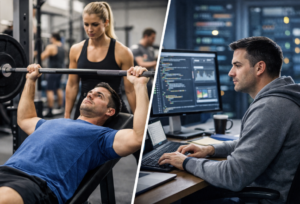
IT professionals live in a world that rewards mental performance, long hours of focus, and the ability to keep showing up under pressure. Between deadlines, tickets, meetings, incident response, and the constant pull of screens, it becomes easy to think of fitness as something extra instead of something foundational. That mindset can become even more important to rethink when GLP-1 medications enter the picture. As the technology world keeps moving fast through updates in AI, cybersecurity, cloud systems, and enterprise tools covered by sources like The Verge, TechCrunch, Ars Technica, WIRED, CIO, and InformationWeek, the people doing the work need bodies that can support sharp minds. Even a broad overview of Information technology shows how demanding and wide-ranging the field has become.
For IT professionals using GLP-1 medications, strength training is not just about appearance. It is about protecting muscle, maintaining energy, improving posture, supporting metabolic health, and helping the body stay capable while weight is changing. That matters when your job depends on focus, consistency, and endurance. This is why strength training on GLP deserves serious attention, especially for busy professionals whose workdays are often spent sitting, troubleshooting, and managing stress.
Why GLP-1 Changes the Conversation
GLP-1 medications have changed how many people approach weight loss and metabolic health. They can help reduce appetite, improve blood sugar control, and support meaningful body-weight changes. That sounds simple on the surface, but the reality is that weight loss does not automatically mean the body is becoming stronger or more resilient.
When body weight drops quickly, there is always a risk that some of what is being lost is not just fat. Muscle can also be part of the equation, especially when protein intake is low, energy intake drops sharply, and resistance training is missing. For an IT professional, that can quietly create a new problem. You may be lighter, but also weaker. You may be eating less, but also recovering less. You may feel encouraged by the scale while your body is losing some of the very tissue that helps you stay physically functional and metabolically strong.
That is where strength training becomes more than a nice idea. It becomes a protective strategy. It gives the body a reason to keep lean mass. It sends the signal that muscle is still needed. Without that signal, the body has less incentive to preserve it.
Why IT Professionals Need This More Than They Think
A lot of people in IT do not work physically demanding jobs in the traditional sense, but their work is still demanding in ways that matter. Sitting for long stretches, hunching over laptops, craning toward monitors, skipping meals, eating irregularly, sleeping poorly, and running on stress can all wear the body down. Over time, weak hips, a stiff back, tight shoulders, poor posture, and reduced muscle mass do not just affect how someone looks. They affect how someone works.
Strength training helps offset that. It supports the muscles that keep posture stronger during long periods at a desk. It can help reduce the physical strain of repetitive daily positioning. It can improve how the body handles long workdays, travel, and interrupted routines. It also builds a sense of physical capability that many desk-based workers slowly lose without realizing it.
For someone on GLP-1, those benefits become even more important. If appetite is lower and total food intake is down, there is less margin for error. The body needs a reason to maintain strength. A sedentary schedule plus reduced intake is not a strong combination if your goal is to come out healthier, stronger, and more capable on the other side of weight loss.
Strength Training Is Not About Becoming a Bodybuilder
One reason some busy professionals avoid strength training is because they picture a high-maintenance gym lifestyle that does not fit their schedule. That is not what this needs to be. Strength training can be practical, efficient, and sustainable.
For most IT professionals, the goal is not to train like a competitive athlete. The goal is to preserve and build useful muscle, support joint health, improve body composition, and stay physically prepared for the demands of life and work. That can start with two or three focused sessions per week. It can include dumbbells, machines, cables, kettlebells, resistance bands, or bodyweight movements done with intention.
What matters most is consistency and progression. Movements like squats, rows, presses, hinges, lunges, and loaded carries give a strong return on time. A focused session does not have to consume your life to be effective. It just needs to be repeated often enough that your body keeps receiving the message that strength still matters.
Muscle Matters for More Than Appearance
This is the part many people overlook. Muscle is not just cosmetic tissue. It plays a major role in strength, movement, stability, metabolic function, and long-term health. Losing too much muscle while losing weight can leave a person feeling flat, weak, tired, and less physically capable than expected.
For IT professionals, muscle also helps with practical quality-of-life issues. It helps support the spine during long seated hours. It contributes to healthier movement patterns outside work. It can improve how the body tolerates stress and activity. It can make daily life feel easier, from carrying equipment and luggage to getting up from the floor, climbing stairs, and keeping aches from building into bigger limitations.
That is one reason strength training pairs so well with GLP-1 use. It helps shape the quality of the weight loss journey, not just the quantity. Anyone can get excited about smaller numbers on a chart. The better goal is becoming leaner while still feeling strong, stable, and energetic.
The Best Approach for a Busy IT Schedule
Busy professionals do not need a perfect routine. They need a realistic one. A smart strength plan should match the rhythm of real life. That means shorter sessions can still work. Full-body training often works better than complicated split routines because it lets you train major muscle groups even if your week gets messy.
A practical plan might involve two or three sessions each week built around core lifts and basic movement patterns. Each workout can focus on pushing, pulling, squatting, hinging, and carrying or core work. The sessions can be done before work, during lunch, after work, or even at home with minimal equipment.
The key is to stop thinking that only long workouts count. A consistent forty-minute training session done well is more powerful than waiting for a perfect ninety-minute block that never comes. IT professionals already understand system reliability, process discipline, and incremental improvement. Strength training works the same way. Repeated inputs over time create the result.
Nutrition Still Matters on GLP-1
Strength training cannot carry the whole load if nutrition falls apart. GLP-1 medications often reduce appetite so much that people unintentionally under-eat, especially protein. That creates a problem because muscle needs support. If the body is being asked to preserve lean mass while total intake stays very low and protein is inconsistent, progress becomes harder.
This does not mean everything has to become obsessive. It means being intentional. Protein needs to stay on the radar. Meals need to remain purposeful, even if hunger cues are quieter than before. Hydration matters. Recovery matters. Sleep matters. The body still needs building blocks if it is going to respond well to training.
For busy IT professionals, this is another reason structure wins. Planning protein-forward meals, keeping simple options available, and treating recovery like part of performance can make a major difference. You do not need drama. You need habits.
Strength Training Supports Confidence at Work Too
There is a business side to this that people rarely talk about. When your body feels stronger, work often feels different. You carry yourself differently. You handle long days better. You recover from stressful stretches with less wear and tear. You feel more steady, not just physically but mentally.
That matters in IT because so much of the job depends on clear thinking under pressure. People often separate physical and professional performance as if they live in different worlds. They do not. Energy, posture, confidence, sleep quality, resilience, and physical capability all affect how you show up in meetings, how you handle pressure, and how sustainable your work life feels.
Strength training is one of the clearest ways to build that foundation while on GLP-1. It supports the body while the medication helps drive change. Instead of letting weight loss happen passively, you take an active role in shaping what kind of body and life you are building.
Conclusion
For IT professionals, GLP-1 should not be treated as a shortcut that replaces the need for strength, movement, and structure. It can be a valuable tool, but the real win is not just losing weight. The real win is protecting muscle, building a stronger frame, supporting energy, and making sure your body keeps up with your ambition.
That is why strength training matters so much in this conversation. It helps turn weight loss into something more complete. It gives your body a reason to stay strong while everything is changing. It helps you come out of the process not just lighter, but better equipped for the demands of work and life.
For the busy IT professional, that is not extra. That is smart strategy.